
You are paying for leads
that nobody ever calls back.
Most owners who tried ads got a pile of names, chased four of them, gave up, and decided ads do not work for their business. Ads work fine. What went wrong happened after the lead came in — it sat in an inbox until that person had already gone somewhere else. We build and run the campaigns on your own Facebook and Google accounts, then answer every single lead that comes back in under a minute, day or night, until they book. You pay the platforms directly and see every dollar of it. What lands on your calendar is appointments, not a list to call.
Paid Ads = Booked Appointments is one of six systems we build. They are designed to connect, so a lead is never dropped between them.
We produce booked appointments on your calendar.
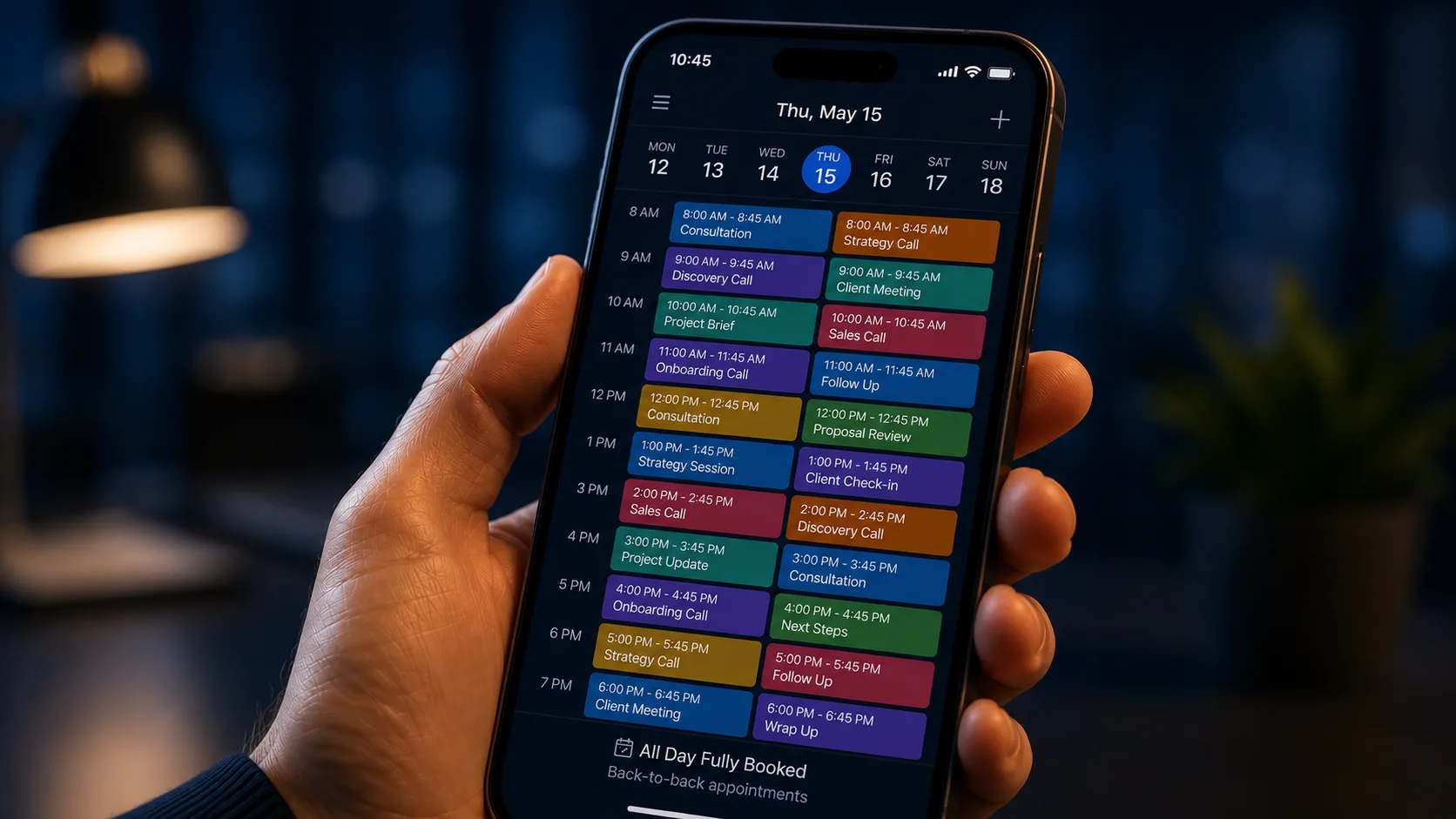
You own the accounts. We do the work on top of them.
The Facebook and Google ad accounts, the piece of code on your website that tells Facebook and Google which ads actually turned into customers, and the calendar are yours and stay yours. You pay the platforms directly, so you see every dollar of spend and we never touch it or mark it up. What we add is the part those platforms do not do on their own: campaigns built around what a customer is actually worth to you, and an answer to every lead the moment it arrives. If we ever part ways, you keep all of it and nothing switches off.
It also means we report on appointments on your calendar, not on how many people filled out a form. Sending more people to a website that does not close just loses money faster, so if the follow-up is slow or the website is not turning visitors into calls, you will hear that from us before you hear it from your bank.
Premium Smart Websites — see how it works → · Speed to Lead — see how it works →
What this looked like on a real account.
28 appointments in a single month
Booked on the calendar, not inquiries. The ads brought the people in and the instant follow-up turned them into appointments — every one of them answered in seconds, day or night.
A week-five lead cost the same as week one
Because the follow-up never stopped. Almost nobody gets paid on week-five leads, for the simple reason that almost nobody is still talking to them.
Every booking tagged to its source
So we could prove which appointments the system produced and which the front desk booked. Most reporting cannot separate the two.
Why we turn the ads on last.
One flat fee every month. Your ad money never touches our account.
We agree what a customer is worth
Nothing gets launched until we both know what one customer is worth to you over the years they stay, and what you can afford to pay to win one.
Campaigns are built to that number
Who sees the ad, what the ad says, and what you spend — all set by what one customer is worth to you, not by whatever is fashionable this year.
Everything is tracked to the booking
Not to the click. A lead that never became work is not a result.
We watch four numbers weekly
Leads, speed of response, bookings, and cost per customer. Everything else is noise.
We tell you when to stop
If the ads stop paying, we turn them off. We would rather lose the spend than lose you. That is what you are hiring us to do.
Know what a customer costs
and what one is worth.
This is the whole job. An appointment only pays if what it costs to produce one sits comfortably below what that customer is worth — and because the spend is yours, you can check that arithmetic yourself, any day of the week.
Cost to acquire a customer (CAC)
What it actually costs you to get one new customer through the door — ad spend, plus everything else it took to turn that stranger into a paying customer. Most owners have never worked it out, which is why "the ads are expensive" is usually the wrong diagnosis.
Lifetime value of a customer (LTV)
What that customer is worth over the whole time they stay with you — not the first invoice, the whole relationship. Once you know this number, you know what you can afford to pay to win one. That single comparison decides what a booked appointment is worth to you.
Key performance indicators (KPIs)
The handful of numbers worth watching every week: how many leads came in, how fast they were answered, how many turned into booked appointments, and what each one cost. Four numbers. Not a dashboard nobody opens.